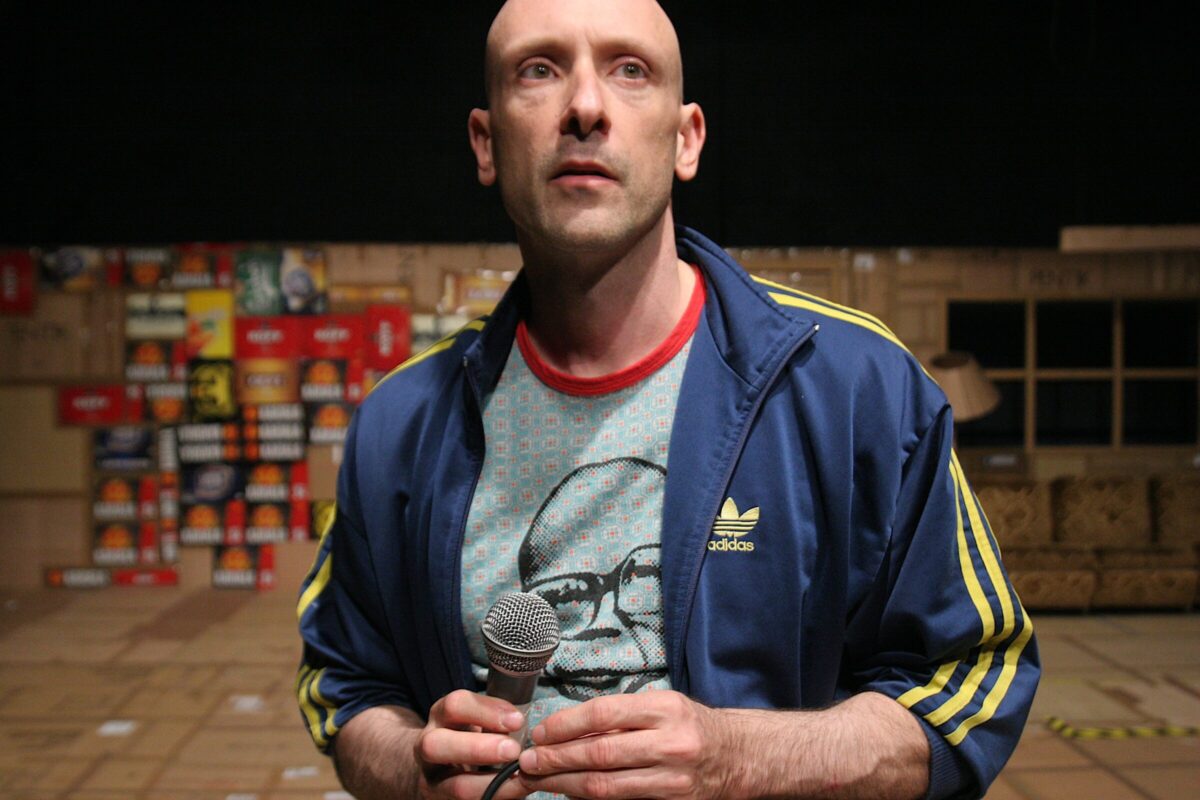
During the 5th edition of the HERE: International Performing Arts Festival, I met the choreographer, dancer and teacher Francesco Scavetta at café Sjögren in Grebbestad. Our conversation traced his early days of creating and his strong connection to the Oslo dance scene, as well as his decision to move far away from the hustle and bustle of city life to establish Vitlycke – Centre for Performing Arts, and what the future might hold.
Before Choreography
Francesco Scavetta has been an active presence in the contemporary dance field for decades, as a choreographer, teacher and organiser. But behind the physical craft lies a history of other interests and art forms feeding into the picture.
Since an early age, Scavetta has been drawn to cinema. As a teenager, he attended cine-forum intensives, immersing himself in the work of filmmakers such as Wim Wenders, Rainer Fassbinder, and Abbas Kiarostami. He describes the format as an opportunity to enter deeply into a single artistic vision.
Not long thereafter, writing became part of Scavetta’s creative practice. During his university years, he published a book of poetry and gravitated toward a multidisciplinary milieu, with friends in journalism as well as the DJ scene. This environment fostered an enduring skill:
– At that time, I was also politically engaged and was nominated political representative in the school. I’ve always had an urgency to share with people, to gather and organise.
Since then, Scavetta has organised a wide range of performances and festivals, encountering numerous artists on the way. But rather than naming mentors as fixed reference points, he prefers to speak of influence as something that accumulates over time, leaving traces that operate on different levels of awareness. Occasionally, past collaborations resurface: He mentions a recent Erasmus+ project, Body Visions, which reconnected him with colleagues from his Brussels years, including Adriana Borriello and Thierry De Mey, both closely associated with Rosas and Anne Teresa De Keersmaeker.
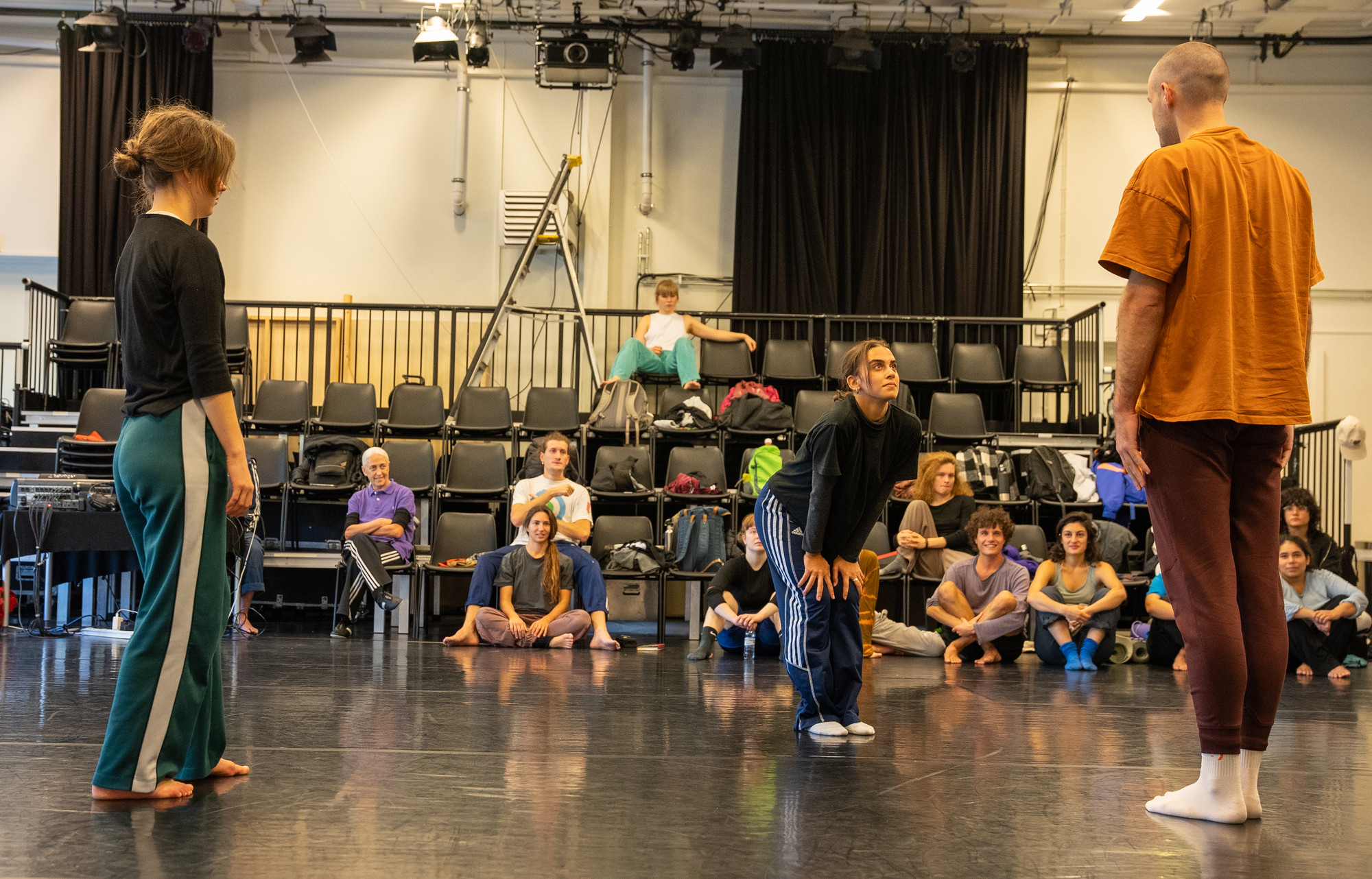
Scavetta’s time in Brussels included the second Pilot Project at P.A.R.T.S., an intense month-long period in the winter of 1994–95. Beyond daily training, evenings were often spent discussing structural questions: how a dance education might function, how time could be organised, how pedagogical models could be rethought. For Scavetta, this collective reflection, practical as much as artistic, became formative.
Among individual mentors, he singles out Dominique Dupuy, not solely for his approach to movement, but for his broader artistic and philosophical outlook. Studying Trisha Brown’s repertoire with Lance Gries also had a big impact.
This insight informs his insistence on transmission. For younger generations, he sees the act of watching, and actively seeking out performances, as highly important.
– Now we have access to a lot of information, he notes, we are overloaded by feeds through social media, YouTube and so on. However, the effort once required to encounter work created a different kind of attentiveness.
Taming the Wild Horse of Creation
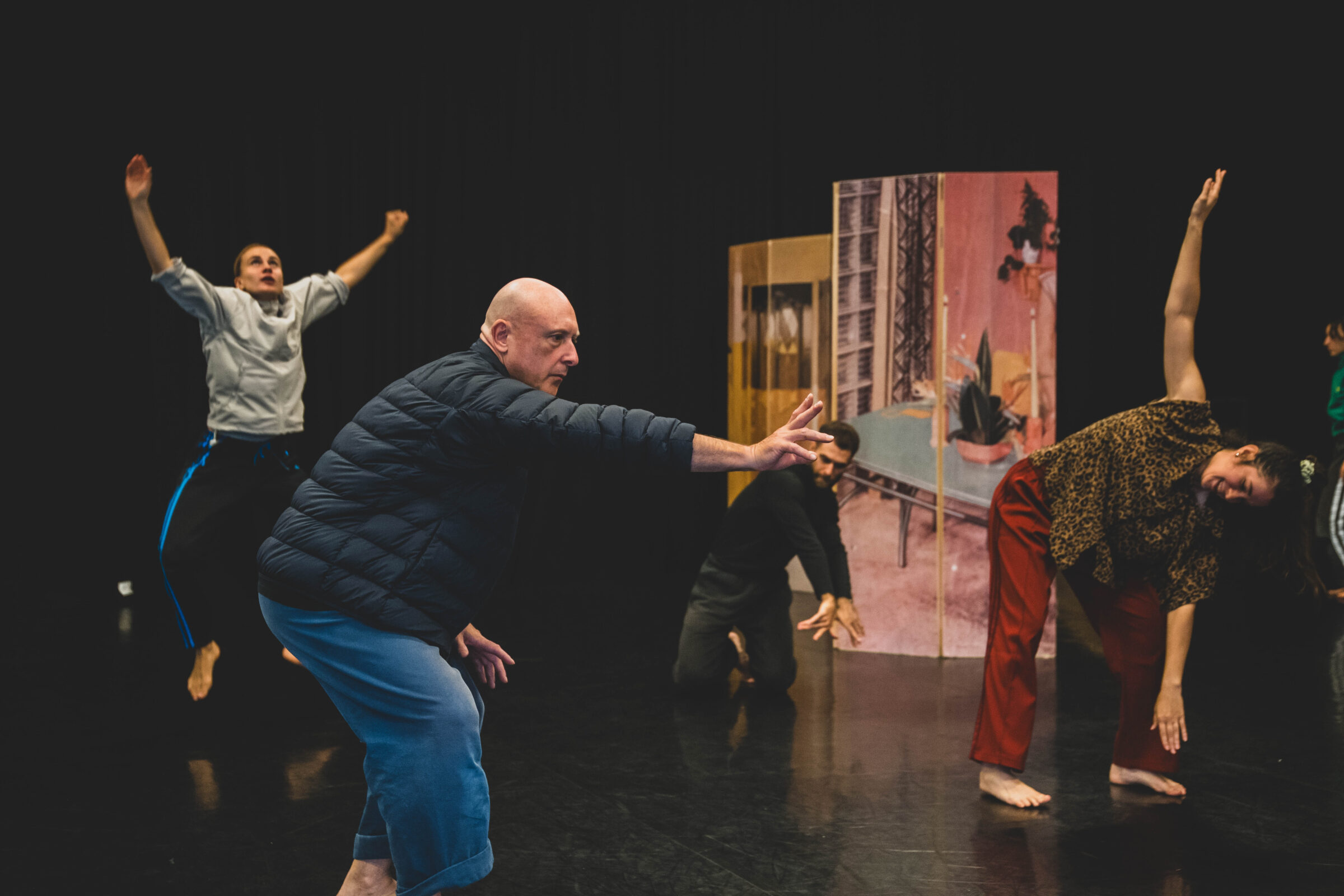
When Scavetta creates, he develops tools that trigger tasks for improvisations.
– I think that in the beginning it’s good to go into a creative process focusing on the concept, he says, and from there find the tools to develop it: the idea must be transformed.
It starts with an accumulation of ideas, where a wide range of movements and materials are allowed to surface, creating a layering of scenes. Early run-throughs can last up to three hours. From this raw material, he starts to “peel off” layers to reduce it to its core. Inspired by the American writer Raymond Carver, Scavetta enjoys removing elements until only the essential is left: if you remove even just one word, the story is not there anymore.
– There is always a beginning before the beginning
There’s a sudden struggle by the table across the room. A desperate flapping of wings. A small bird has flown in through the open window of the café. Several guests get up to open all the windows, and the bird continues its journey away from us. Scavetta uses the situation to illustrate his cinematic approach to choreography.
– There is always a beginning before the beginning, Scavetta says with a smile.
– You choose where you start to tell the story.
He speaks of artistic choices and dramaturgical frames. Here we had an intervention by a bird, which offered a meta-narrative to the situation we find ourselves in: Where did this interview start? Was it when I asked the first interview-question, or did it start before that, when I was stuck in the rain? The story could also start with the bird entering through the open window…
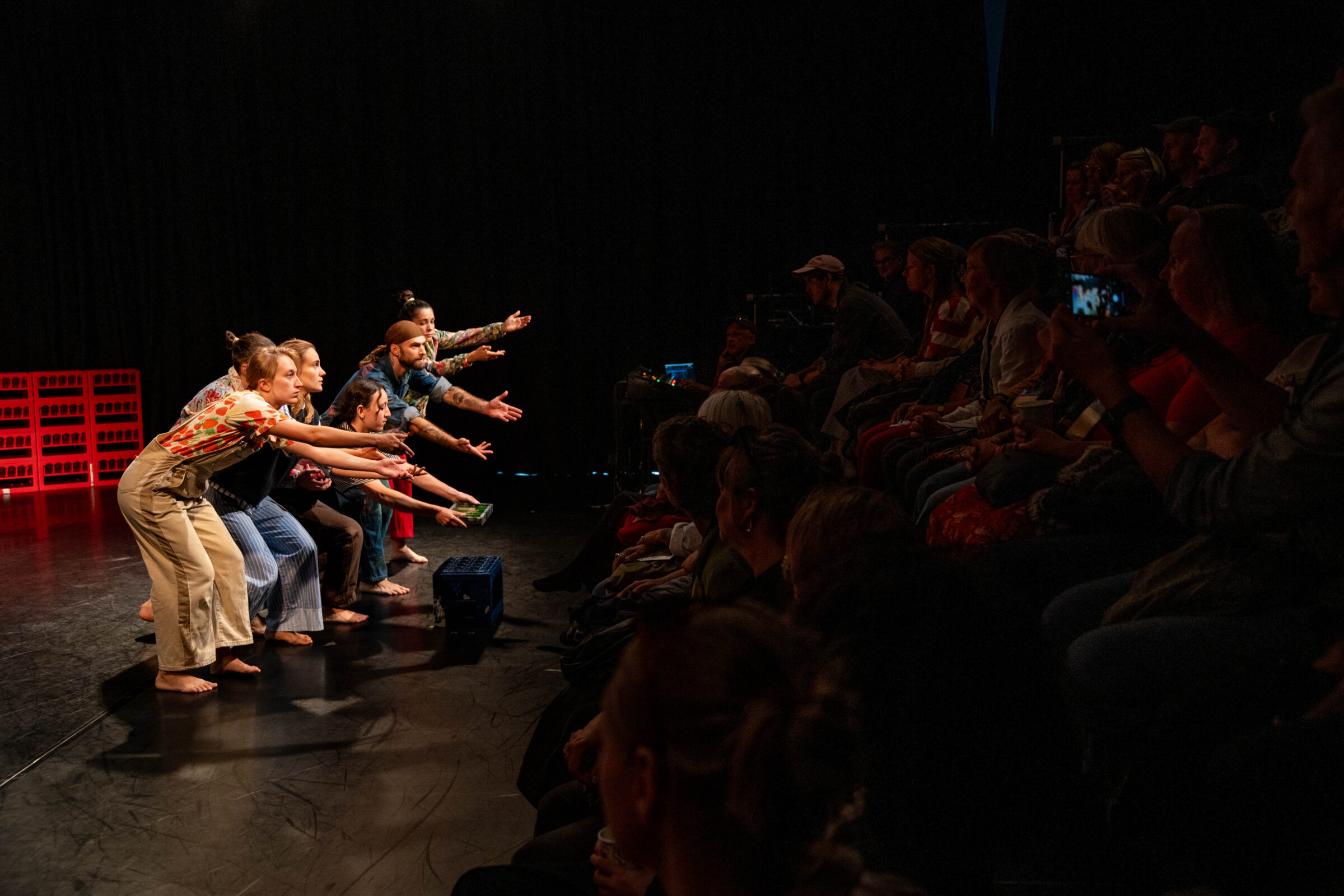
These are the kinds of choices Scavetta cherishes in his artmaking and actively plays with in his processes.
– In a piece, you can choose where you start the story, and then everything that happens is related to it.
For Scavetta, this means that even if parts are removed, the other layers, background information and prior decisions, remain in the memory of the performers and continue to shape the work.
When describing his approach to movement, one thing sticks out as essential: allowing movement to flow.
– To cross freely through the body, more than being in charge, «in control» of it. It’s a deep work on how to approach dancing.
He explains that in a similar way, the finished performance is not static, the process continues also after the premiere. Just as the dramaturgy of the pieces can differ from performance to performance, he thinks they are very affected by the participants. They continue to fuel and trigger the process of discovering the piece while doing it, so touring is never repeating a «repertoire” as such, it is continuously engaging with the piece creatively.
Scavetta describes his pieces as the results of a collective effort:
– Sometimes it’s like riding a wild horse, he exclaims, where you’re trying to keep it in a certain direction, but where it also takes on its own.
The group participating in the piece is itself a maker, a creator, together with me, both physically and conceptually. The piece Nowhere like Here, which is currently touring in Europe, consists of a group of dancers selected from auditions in five different countries. The dancers had never worked together or with Scavetta earlier.
– It took time, but they became very strong as a collective, even in terms of having agency on shaping the piece.
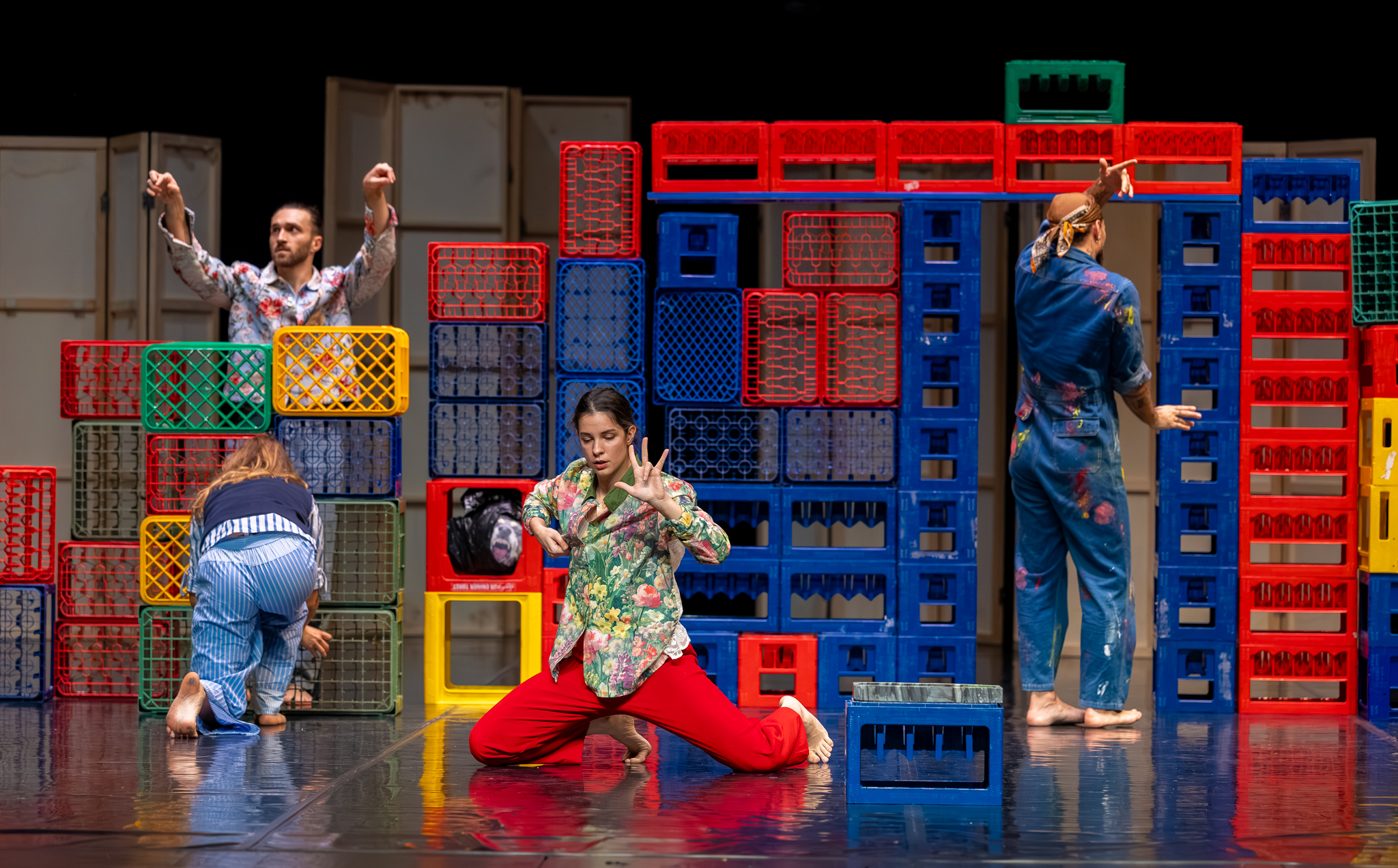
To enhance group awareness and responsiveness, the choreographer offers To enhance group awareness and responsiveness, the choreographer offers many daily practices. The embodied experience of witnessing is a crucial part of the process.
– We rehearsed the structured improvisations leaving one dancer as observer, he explains, constantly rotating, so that everyone could have the same experience. He emphasises how this embodiment through observing leads to a deeper understanding of how each decision is affecting the group.
Wee Company – Early Days and the Present
Wee Company, founded in Oslo in 1999 by Francesco Scavetta and Gry Kipperberg, emerged from a sequence of encounters that quickly transformed individual projects into a sustained practice. Conceived as a project-based ensemble, Wee has worked with shifting constellations of collaborators, while maintaining long-term artistic relationships.
– The first time I came to Scandinavia, was my kind of «turning point».
Scavetta traces this trajectory back to his first visit to Oslo in 1995, when Pasatua che va alla fontana, co-created with Giorgio Rossi, premiered at Black Box Theatre. The reception of the work, and his own sense of connection to it, marked a crossroads. Touring the piece internationally confirmed both the viability and the pleasure of sustained performance practice.
That initial encounter led directly to further work in Norway. Scavetta became involved in the creation of Like Clouds, working as both dancer and assistant choreographer alongside composer Jon Balke and trumpeter Arve Henriksen. The collaboration initiated long-standing artistic relationships within the Norwegian dance and music scene.
Soon after, Lise Eger invited him to create a work for Imago Dance Company. Premiered in 1998, Daddy always wanted me to grow a pair of wings toured with Riksteatret across Norway and later internationally. The success of the production consolidated Scavetta’s position in the Norwegian context and laid the groundwork for Wee Company’s formation the following year.
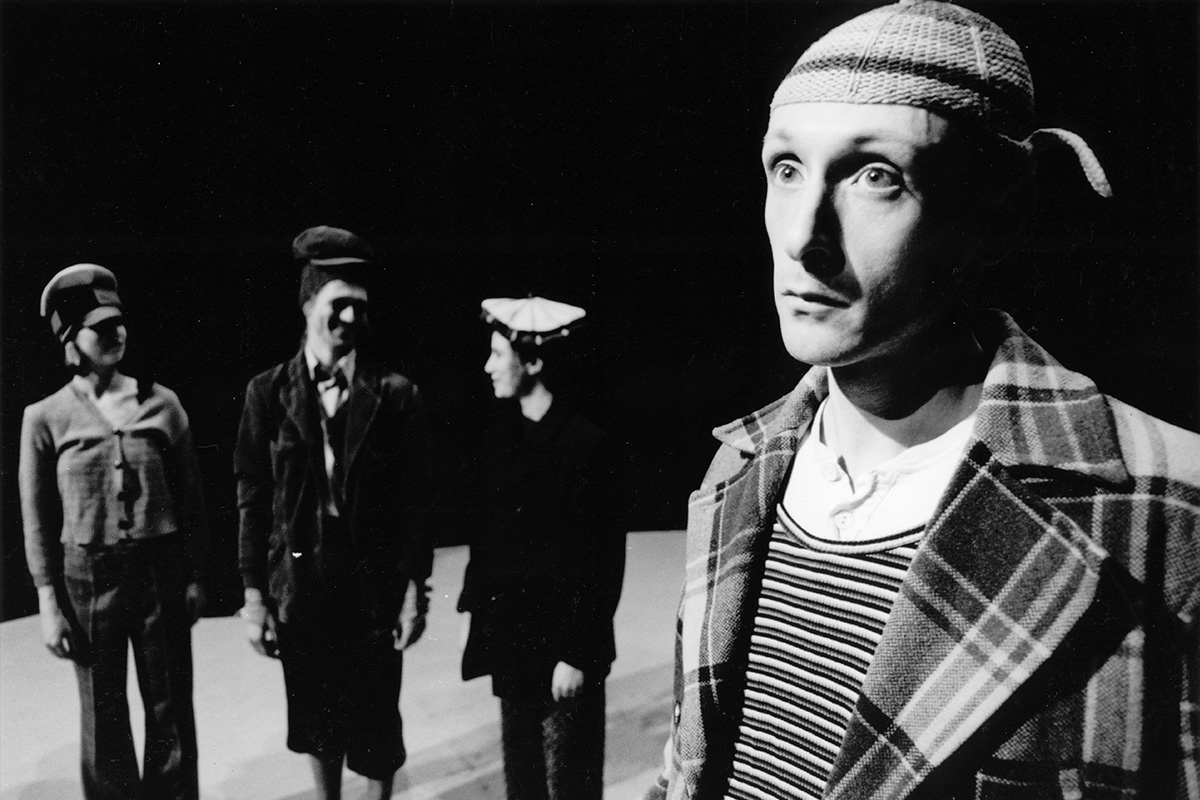
From the outset, Wee developed what Scavetta describes as an “extended practice”:
– We received support and we started immediately exploring different formats, he says, indoor and outdoor/site specific. The touring was accompanied by many other activities: workshops, creations, other showings, lectures, post-show talks with audiences, and DJing.
Looking back, Scavetta links this orientation to his early professional experience in Italy, where companies were required to perform extensively each year. The sheer volume of performances, across large and small stages alike, shaped his understanding of practice as something forged through repetition, exposure, and continuous engagement with audiences.
To date, the company has created 23 full-length works and toured extensively internationally, with a new production planned for 2026.
Vitlycke and the Politics of Place
According to Scavetta, Vitlycke Center for Performing Arts, situated in rural Tanum, has never replaced his Norwegian connections, but rather reconfigured them. After several years of concentrating his energy on building Vitlycke, he is now preparing to re-engage more actively with Norway through Wee Company’s next production planned for 2026.
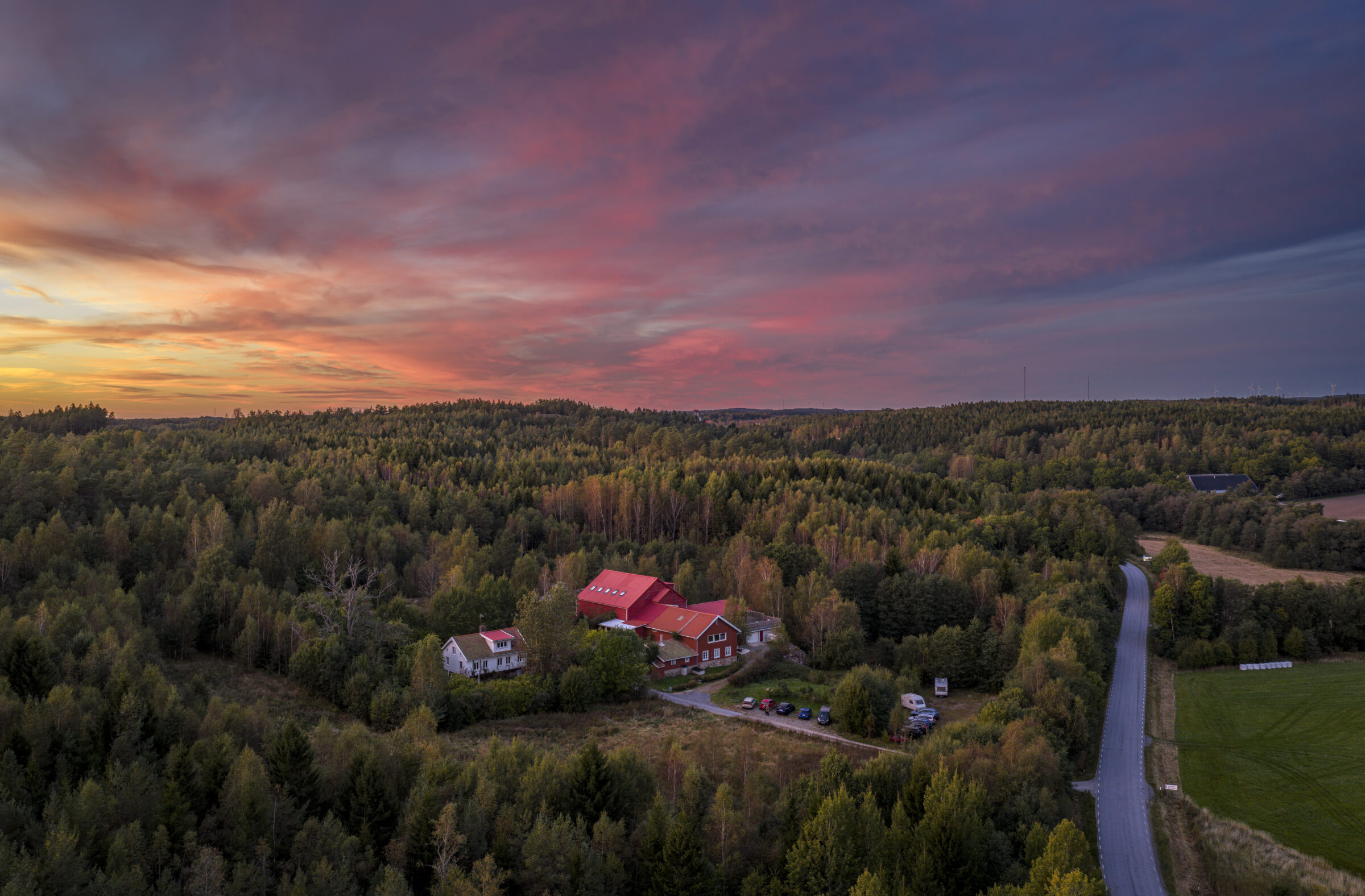
From the outset, Vitlycke was conceived as an artist-led organisation rather than a curatorial or producing structure. Scavetta emphasises that Wee Company’s long-standing international touring and pedagogical activity laid the groundwork for Vitlycke’s existence. Teaching across nearly fifty countries, he often encountered a recurring pattern: invitations to teach would later lead to performances, reinforcing the idea of practice as something that circulates and regenerates.
Vitlycke itself emerged out of necessity. In 2008, the loss of Wee Company’s studio in Oslo prompted Scavetta to search for alternatives beyond the city. What began as a chance encounter in Tanum gradually became a commitment to decentralisation. Initially little more than a farm with partly converted spaces, Vitlycke demanded more than physical reconstruction. It required navigating unfamiliar funding systems, national frameworks, and administrative realities.
From its very first residency in 2012, Vitlycke-CPA has positioned itself as an international platform. The transformation of the studio into a black box in 2014 was a milestone, enabling technical production and public presentation. Since then, the centre has expanded through collaborations, partnerships, and educational initiatives such as TOWARDS: a cycle of intensive workshops that include physical praxis, evening lectures, video screenings and live performances. This autumn, the guest artist was no other than renowned choreographer Xavier Le Roy.
By its rural environment, Vitlycke naturally creates conditions that reshape how work is made. Removed from urban routines, artists who come here for a residency enter a shared temporal and spatial concentration that allows processes to unfold beyond scheduled rehearsal hours. For Scavetta, it is evident that this immersion creates a heightened level of engagement in the artistic process.
HERE: International Performing Arts Festiva
HERE: International Performing Arts Festival has never operated with a fixed profile. Each edition is shaped by a specific conceptual frame, often developed through collaborations that function as curatorial dialogues rather than thematic labels. In recent years, this has included partnerships such as this year’s collaboration with Sekoia Artes Performativas in Portugal, where open calls in different countries create a mirrored selection process across contexts.
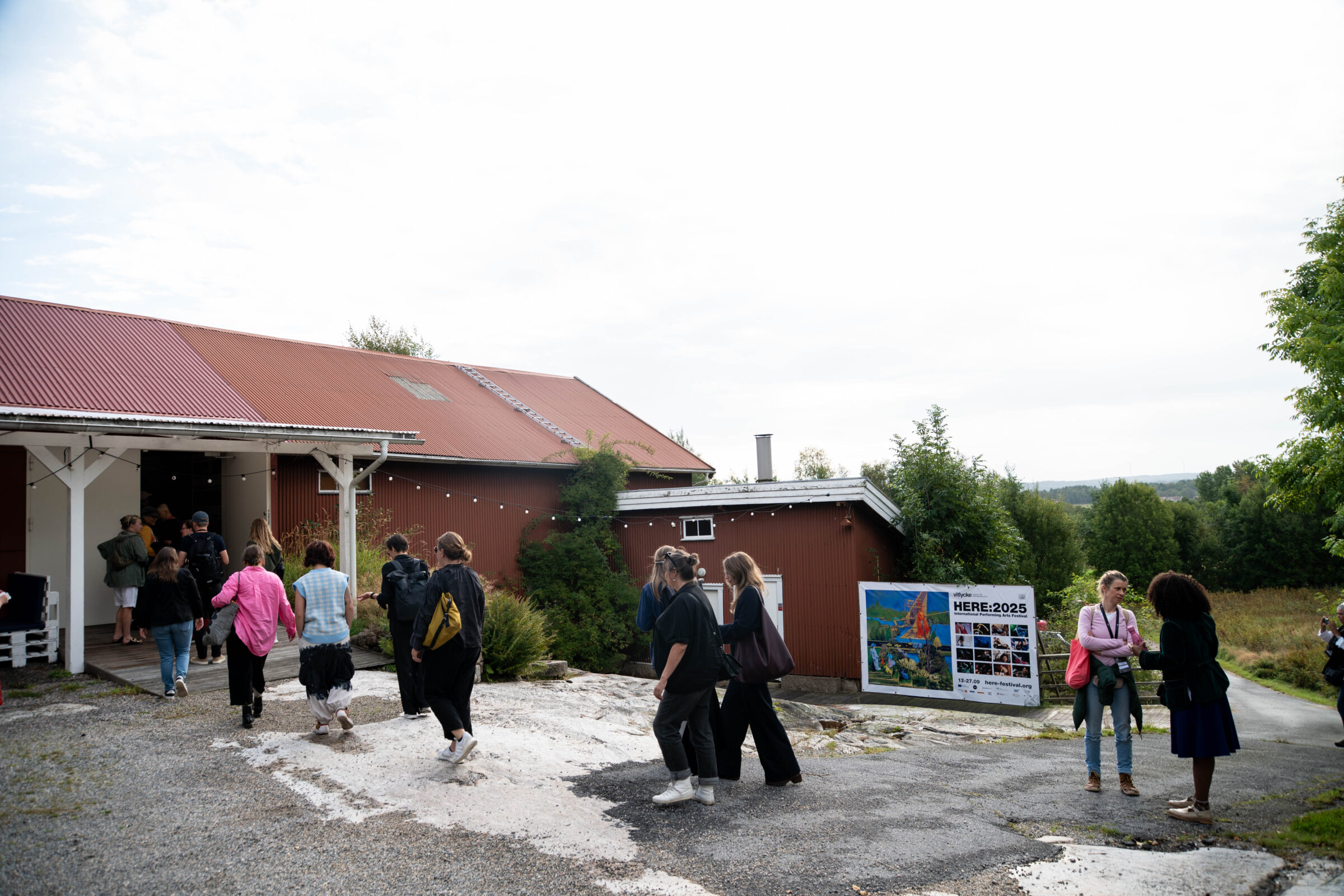
The festival actively constructs situations of encounter. Works are often chosen for their ability to exist both in theatrical settings and in site-specific environments, allowing performances associated with international art capitals to appear in a rural context. Scavetta frames this as a curatorial position rather than an audience strategy.
– The selection of the performances is not necessarily done to meet the expectation of the audience. It’s done with the idea of challenging those expectations and fuelling curiosity.
Visual identity plays a parallel role: recent editions have collaborated with Costa Rican visual artist Luciano Goizueta to create layered imagery rooted in local references and transformed through urban visual languages.
– It’s the idea to bring the urban into the nature, presenting performances that you could very easily watch in an international capital, but they are happening “in the middle of nowhere” in Tanum. Scavetta can see that there’s a sort of misplacement, in this sense, that can be challenging for some audiences.
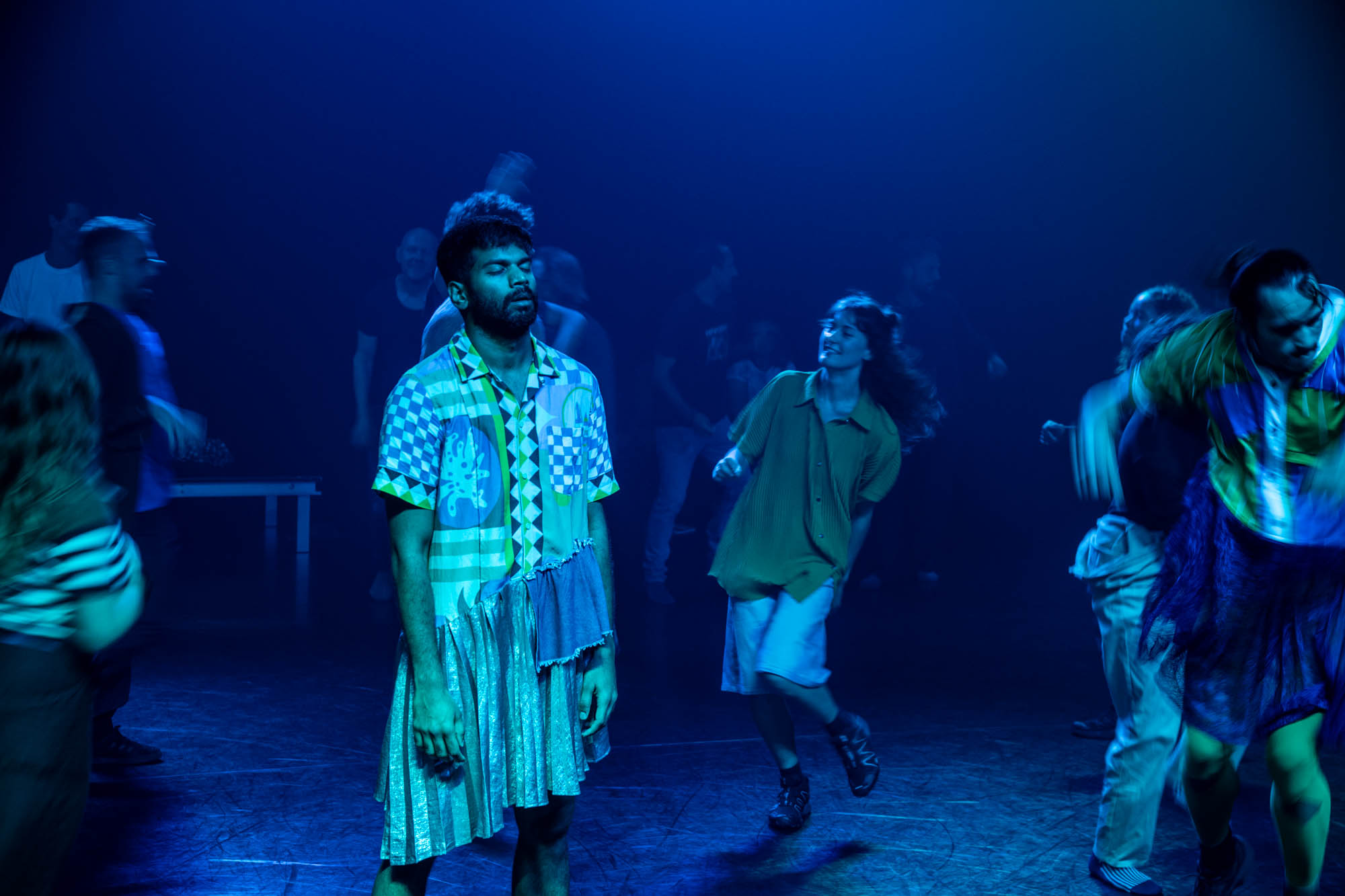
While attracting audiences can be difficult, those who attend tend to engage deeply.
– In general, the people coming to watch have always been creating interesting conversations, he says. – When we’ve had after talks, the audience always came out with very sensitive and bright intuitions, reflections, and associations on what they saw.
Looking ahead, the festival’s future is secured for the next edition, and the idea of mapping,; focusing each edition on a different geographical or conceptual framework; remains central. As is the idea continuation: each edition becomes a starting point for the next.
Layers of Laughter
Scavetta’s work consistently operates in the space between dream and reality, where playfulness and gravity coexist. For him, humour and poetry are not aesthetic add-ons but political tools; ways of activating the spectator rather than instructing them.
– There is a laughter that can be perceived as a first reaction, and then you can realise: ‘Wait a moment, we are laughing, but what are we laughing about?’ Underneath you can sense a darker feeling, an aftertaste.
He describes the audience as an active participant, drawn into an associative process that unfolds alongside the performance. Laughter often functions as an entry point: immediate, disarming, and seemingly light. Yet this initial response is frequently followed by hesitation, a moment of recalibration in which the viewer begins to question their own reaction. What seemed harmless may reveal something darker, something more complex.
This shift, from recognition to disturbance, is central to his understanding of politics in performance. Rather than confronting the viewer head-on, humour creates a form of misplacement, allowing difficult themes to surface indirectly, like a sort of «epiphany» that destabilizes expectations.
– I’ve been fascinated by the idea of consciousness and perception, he says, on how different levels of awareness that can be revealed, in a dynamic between vision and illusion.
Drawing on ideas from cognitive science, he reflects on the brain as a predictive system, constantly constructing reality through a negotiation between sensory input and prior experience. He describes it as a «controlled hallucination» of reality, where the brain filters and combines incoming sensory information with prior expectations, beliefs, and memories, in order to form a coherent, conscious experience.
A Dance that Keeps Moving Forward
When asked about legacy in dance, Scavetta speaks of traces, of practices, encounters, and shared experiences that continue to circulate beyond their original context. Much of this transmission takes place through pedagogy. Over the years, he has articulated distinct methodologies; A Surprised Body, Embodying Semantics, Poetics of Movement; each emerging from specific creative processes and performances.
– I think that my teaching has left many traces in people that have been exposed to it.
At times, the effects of this circulation return unexpectedly. Years after the premiere of his work Daddy always wanted me to grow a pair of wings, when Scavetta was teaching in Amsterdam, he was approached by a dancer who told him “I started dancing after I saw your piece.”
Other moments surface through mentoring relationships or messages from former collaborators, reminders that influence is not bound to geography or duration. One such message, sent by a dancer in Colombia during a period of intense travel, captured this understanding succinctly. Jokingly, the dancer asked where Scavetta might be: “in Alaska, or in a desert riding a camel?” What mattered, he wrote, was not his location but his presence: when Scavetta arrived in Bogotá, he was not simply passing through, he was with the people there, sharing time and attention.
Looking ahead, Scavetta remains open to shifting focus back to Wee Company, to continuing HERE Festival, and to strengthening the artistic bridges to Norway and to the wider international scene. What stays constant is his insistence on process, on curiosity, and on the importance of performance as a shared space for imagination and reflection.
– It’s never about repeating the same piece, he tells me, but about continuing to discover it together. In that sense, his legacy is not fixed but ongoing: a dance that keeps moving forward.
Francesco Scavetta (IT/SE)
– er en koreograf og scenekunstner med base i Norden. Han grunnla kompaniet Wee i Oslo i 1999 sammen med Gry Kipperberg. Kompaniet har siden utviklet et omfattende internasjonalt virke med forestillinger og turnéer i en rekke land, og har markert seg som en viktig aktør i nordisk samtidsdans.
Han er grunnlegger av Vitlycke – Centre for Performing Arts i Sverige, hvor han kuraterer festivalen HERE, utvikler fortløpende forestillinger, residensvirksomhet og workshops med internasjonalt anerkjente koreografer.
Scavetta arbeider omfattende med undervisning og internasjonale workshopformater. Hans pedagogiske prosjekt A Surprised Bodyhar siden 2005 blitt invitert til 47 land, og han har ledet workshops og masterklasser ved en rekke utdanningsinstitusjoner og festivaler, inkludert Impulstanz (Wien), P.A.R.T.S. (Brussel), SEAD (Salzburg), Tanzquartier Wien, Greenwich Dance (London), K3 Hamburg og Hot Summer Kyoto International Workshop Festival (Japan).
Ingeborg Zackariassen (NO/SE)
– er en dansekunstner, kritiker og skribent basert i Göteborg. Hun har en MFA i Contemporary Performative Arts fra HSM / Göteborgs universitet (2024) og driver den kunstneriske plattformen No Deadline sammen med Toby Kassell.
Hun har bakgrunn som danser ved GöteborgsOperans Danskompani, Skånes Dansteater og Nasjonalballetten. Hun arbeider i dag som skribent og med kunstnerisk utvikling og kuratering i det frie scenekunstfeltet.
Zackariassen skriver om dans, kunst og kulturpolitikk, og har bidratt med tekster til blant annet tanz.dance, Tanz International, Springback Magazine, Norsk Shakespearetidsskrift, Danstidningen og Göteborgs-Posten. Hun utvikler også skriveplattformen Writing the Movement på Substack.